Sam Neill Reveals He Is Cancer Free After Years Long Battle With Blood Cancer
- Apr 28
- 4 min read
28 April 2026
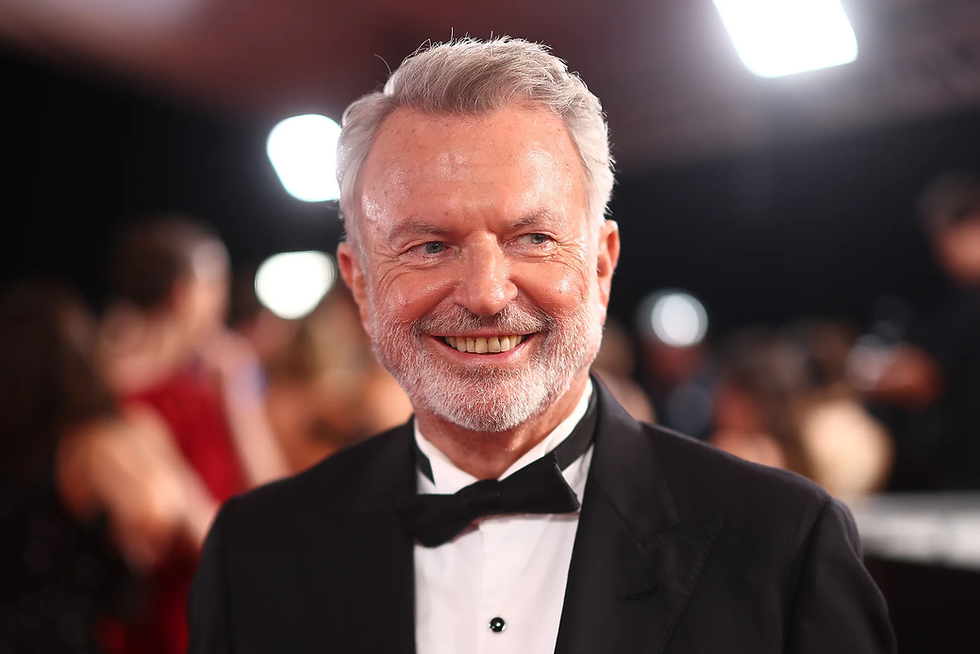
For many actors, career milestones are measured in films and performances, but for Sam Neill, the most significant moment in recent years has come away from the screen. After quietly navigating a long and difficult health journey, the actor best known for his role in Jurassic Park has now shared news that feels both deeply personal and widely celebrated, he is officially cancer free.
Neill, 78, revealed the update during a recent interview, confirming that after years of living with a serious illness, his latest scans show no trace of cancer in his body. The announcement marks a major turning point in a battle that began several years ago, when he was diagnosed with stage three angioimmunoblastic T cell lymphoma, a rare form of blood cancer.
His journey with the illness was anything but straightforward. Initially, Neill underwent chemotherapy, a treatment he later described as extremely difficult but necessary to keep the disease under control. Over time, however, the treatment stopped working, leaving him in a position where options became increasingly limited. He spoke candidly about that period, recalling how the situation began to feel uncertain and how the possibility of losing the fight became very real.
Faced with that reality, he turned to a different approach. Neill entered a clinical trial for CAR T cell therapy, a form of immunotherapy that works by modifying a patient’s own immune cells to recognize and attack cancer. The treatment, still considered advanced and not widely accessible, represented a step into uncertain territory, both medically and personally. Despite the risks and unknowns, it ultimately became the turning point in his recovery.
The results have been remarkable. Recent scans have confirmed that there is no cancer remaining in his body, a development he described as extraordinary. His words reflect not just relief, but a sense of disbelief at how far he has come, especially after moments when the outcome had seemed far less certain.
Throughout this process, Neill maintained a complex relationship with his illness. He has spoken in the past about being open to the idea of death, not out of resignation, but from a place of acceptance. At the same time, his focus remained on continuing to live fully, to work, and to stay engaged with the things that matter to him. That perspective shaped how he approached treatment, balancing realism with a quiet determination.
His decision to share his experience publicly carries its own significance. Neill has acknowledged that he initially felt uncomfortable discussing his illness, choosing to keep much of it private while undergoing treatment. In speaking out now, he has shifted that approach, using his story to highlight the importance of medical innovation and the potential of new therapies to change outcomes for patients facing similar diagnoses.
He has also become an advocate. Following his recovery, Neill has aligned himself with efforts to promote greater access to treatments like CAR T cell therapy, particularly in regions where such options remain limited. His involvement reflects a broader intention to turn his personal experience into something that can benefit others, extending the impact of his journey beyond his own life.
At the same time, there is a sense of return. Neill has expressed a desire to get back to work, to continue acting, and to re engage with the career that has defined much of his life. For an actor whose filmography spans decades and includes roles that have become part of cinematic history, the idea of continuing forward carries a renewed meaning.
That connection to his work remains strong. From his portrayal of Dr Alan Grant in Jurassic Park to a wide range of performances across film and television, Neill’s career has been shaped by a mix of intensity and warmth that has resonated with audiences for years. His return to that space, after facing such a personal challenge, adds another layer to how his work is understood.
There is also something larger in the story he now represents. His recovery highlights the role of science in changing outcomes that once felt fixed, showing how advancements in treatment can shift the course of an illness that might otherwise have had a very different ending. It also underscores the importance of access, awareness, and continued research in shaping the future of healthcare.
In the end, Neill’s announcement is not just a health update. It is a moment that reflects resilience, uncertainty, and the possibility of renewal, all contained within a journey that has moved from diagnosis to recovery. It carries both the weight of what he faced and the relief of what he has overcome, creating a narrative that feels as meaningful as any role he has played.
And as he looks toward the future, with the intention of returning to the work he loves, there is a sense that this chapter, defined by challenge, now opens into something else entirely, a continuation shaped by gratitude, perspective, and the simple fact of being able to move forward.


Comments